Low E Glass | 10 Facts About Energy Efficient Hard & Soft Coats
Low E glass, also known as low-emissivity glass, is designed to improve energy performance by helping control heat transfer while still allowing natural light into a building.
Used in windows, entrance doors, storefronts, curtain walls, and insulated glass units, Low E glass can help support better thermal performance, solar control, interior comfort, and energy efficiency in residential and commercial projects.
This guide answers key questions about Low E hard coats and soft coats, including how they work, where they can be used, which options are available, what sizes and thicknesses can be fabricated, and how they can be integrated into architectural glazing systems.

Low E Glass. Learn All About It.
How Does Low E Glass Work?
Low E glass uses a thin, transparent coating applied to the glass surface to help manage heat transfer. The coating reflects portions of infrared energy and UV radiation while allowing visible light to pass through.
Compared with standard clear glass, Low E glass is often selected when a project requires better energy efficiency, solar control, and daylight performance without making the space feel closed or overly dark.
How Can Low E Glass Improve Energy Efficiency?
Low E glass can help reduce the amount of heat that passes through the glass. In warm climates, it can help limit unwanted solar heat entering the building, while in cooler conditions it can help reduce heat loss through windows and glazing systems.
Actual performance depends on the specific Low E coating, glass make-up, insulated glass configuration, frame system, building orientation, and local climate.
Can Low E Glass Help Protect Interior Furnishings from Fading?
Yes. Low E glass can help reduce UV exposure, which may help slow fading in interior materials such as flooring, carpets, curtains, furniture, artwork, and displays.
Can Low E Glass Be Used in Insulated Glass Units?
Yes. Low E glass is commonly used in insulated glass units, also known as IG units, to improve thermal performance and solar control.
Depending on the project, Low E glass may be combined with clear, tinted, reflective, laminated, or other specialty glass options to achieve the desired balance of energy performance, appearance, daylight, and privacy.
Which Low E Hard Coats Are Available?
Low E hard coat options may include products from recognized manufacturers such as Sungate® by Vitro® and Energy Advantage™ by Pilkington.
Availability can change based on inventory, project requirements, coating type, glass thickness, and supplier conditions, so final options should be confirmed before ordering.
Which Low E Soft Coats Are Available?
Low E soft coat options may include products such as SunGuard®, SuperNeutral®, and ClimaGuard® by Guardian, as well as Solarban® by Vitro®.
Soft coat Low E glass is often selected for projects requiring stronger solar control, improved thermal performance, or specific visible light and reflectivity targets.
What Sheet Sizes Are Available?
Low E glass can be fabricated in a wide range of sheet sizes for architectural glazing applications. Available size capabilities include a minimum sheet size of 84” x 184” and a maximum sheet size of 110” x 198”.
Custom and oversized panels may also be available depending on the selected coating, glass type, thickness, fabrication requirements, and project specifications.
Low E Glass: Sizes, Thicknesses, and Project Use
What Low E Glass Thicknesses Are Available?
Low E glass can be fabricated in several standard thicknesses, including 1/8”, 3/16”, and 1/4”.
Thickness selection should be based on the application, glass make-up, system requirements, panel size, performance needs, and applicable project specifications.
Where Can Low E Glass Be Used?
Low E glass is commonly used in exterior glazing applications where energy performance, daylight, and solar control are important.
Common applications include windows, entry doors, storefront systems, curtain wall systems, insulated glass units, commercial façades, residential glazing systems, hospitality projects, and retail projects.
What Are Typical Lead Times?
Lead times may vary depending on coating type, glass size, thickness, fabrication requirements, quantity, and current production schedules.
Standard Low E glass orders may be available within a few working days, while expedited service may be available for select configurations. Rush production, next-day service, or expedited orders should be confirmed before placing the order.

Why Can Low E Glass Be Fabricated Efficiently?
Low E glass fabrication can be completed efficiently when coating inventory, tempering capacity, and in-house processing are coordinated under one manufacturing process.
The fabrication process may include multiple tempering ovens, including convection tempering systems designed to handle soft coat Low E glass. This can help support quality control, production consistency, and faster turnaround for many energy-efficient glass orders.
Low E Glass for Energy-Conscious Glazing Projects
Low E glass is a practical option for projects that require improved energy performance, visible light transmission, solar control, and interior comfort.
Available in hard coat and soft coat options, Low E glass can be specified for windows, doors, storefronts, curtain walls, IG units, and other architectural glazing systems.
For Low E glass options, sizes, thicknesses, coating availability, estimates, or order support, contact Architectural Glass and Metal directly.
Quick Product Photo Gallery

Protective glass shields

Free standing glass shield base

Plexiglass shields

Glass fences

Protective plexiglass shields

Glass shields

PRL Glazing Products

Colored Laminated Glass

Solarban® 60 Low-E Glass

Laminated Glass Manufacturing

PRL Low-E Glass

2013 Top Performing Glazing System

Aluminum Doors

Elegante Handrailing System

5 Easy Steps to Shop

316 Stainless Steel Hinge

2012 Complete Handrail Catalog

2012 Top Performing Glazing Solutions

Happy Thanksgiving – 2015

2017 Top 4 Best Sellers

2018 Architectural Glass Catalog

Accordion Sliding Bifold Door System

Accordion Sliding Bifold System

Accordion Sliding Bifold Door System

Accordion Sliding Bifold Door Systems

Accordion Sliding Bifold Door System

Four Krystal Textured Glass Patterns

Adjustable Aluminum Door Stile

All Glass Door Systems

All Glass Entrance Doors and Hardware

All Glass Panic Device Doors

All Glass Railing Systems

All Glass Shower Doors and Hardware

All Glass Sliding Doors

All Glass Sliding Doors

All Glass Swing Door Fittings

All-In-One Patch Fitting and Closer

Aluminum Glass Door Manufacturer
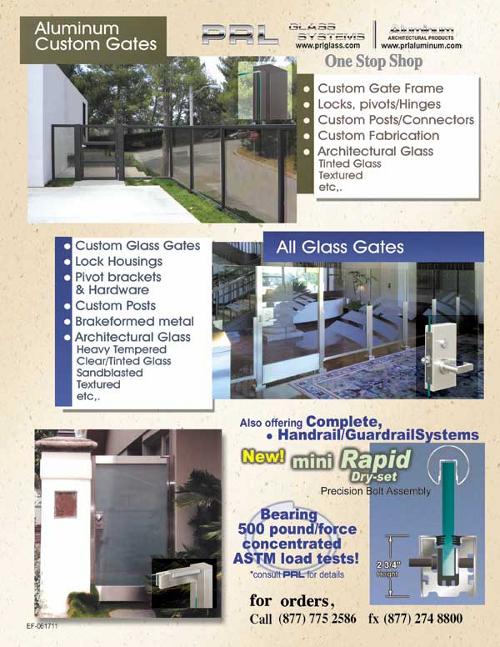
Aluminum Glass and Gates

Aluminum Bifold Accordion Doors

Aluminum Curtail Wall Systems

Aluminum Doors

Aluminum Entrance Doors and Storefronts

Aluminum Extrusions

Aluminum Gates and Doors

Aluminum Glass Walls
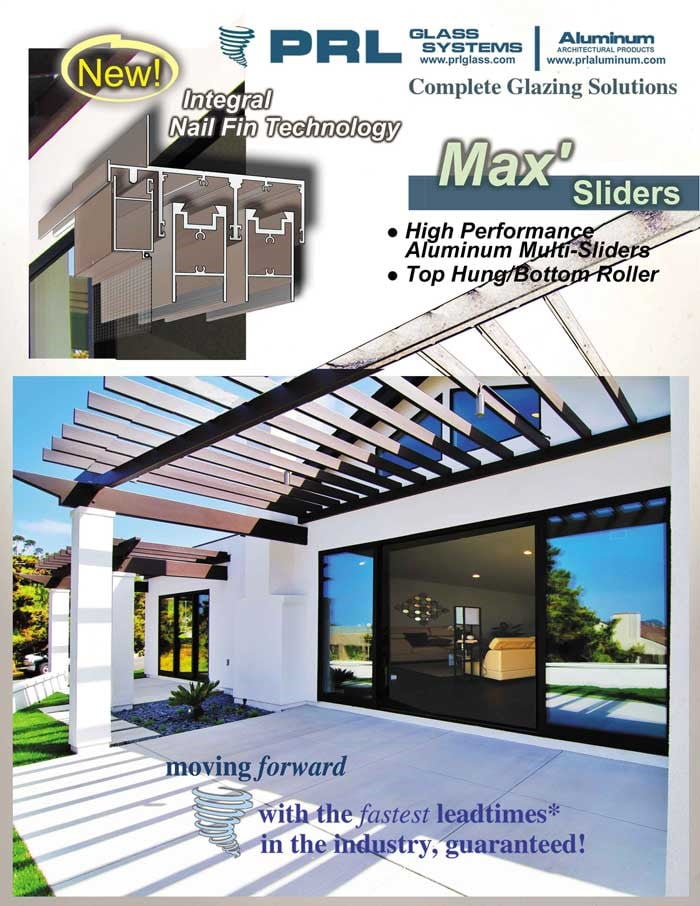
Aluminum MAX' – Nail Fin Technology

Aluminum Modular Railing

Aluminum Multi Panel Sliding Door

MAX'Sliders – 1 Inch Narrow Stile
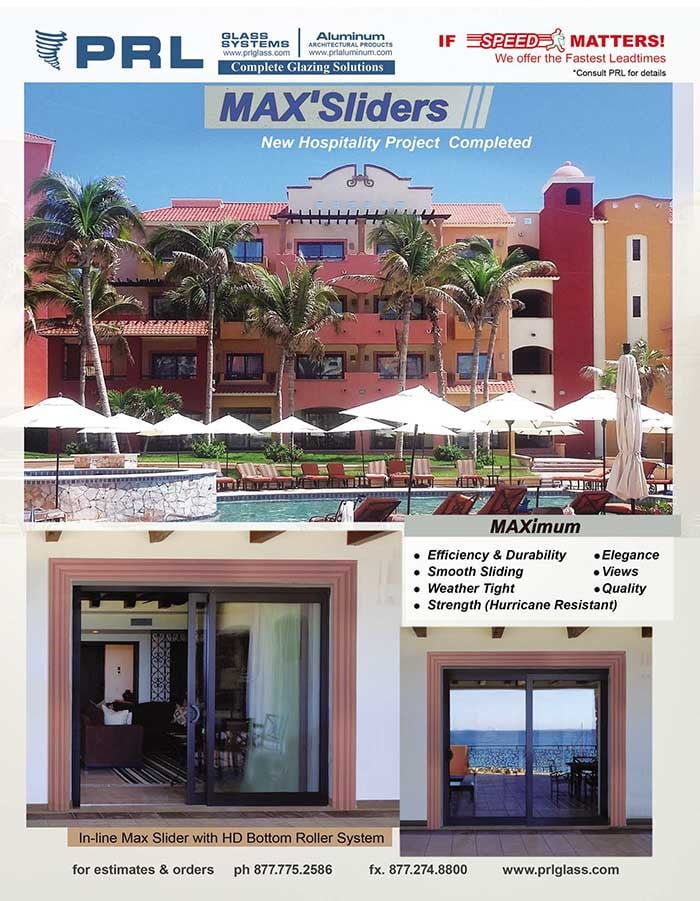
Aluminum Sliding Door System

Aluminum Storefronts

Aluminum Storefront Products

Alumi-Slider

Aluminum Sliders

architectura-glass-and-metal

Architectural Break Metal Products

Architectural Glass

Architectural Glass and Metal Catalog

Architectural Glass and Metal Products

Architectural Glass and Metal Top Performers

Architectural Glass Photos

Architectural Metal

Architectural Reflective Glass

Ari Compound Laminated Glass Doors

Automated Extrusion Press

Automatic Swing Door Operator

Ballistic Resistant Glazing Laminate

Bottom Rolling MAX'Sliders

Bottom Rolling Sliding Doors

Bullet Resistant Glass

Buy Glass Online

California Glass and Metal Fabricator

California Handrail Manufacturer

Clad Doors

Clad Full Framed Entrance Door Systems

Classic Full Framed Sliding Doors

Clearvision Stacking Movable All Glass Wall System

Colored Spandrel Glass

Commercial Aluminum Entrance Doors

Complete Aluminum Storefront Systems

Complete Glazing Systems

Complete Handrail Systems

Complete Shower Door Units

Custom Aluminum Entrance Doors

Custom Aluminum Entrance Doors – Storefront

Custom Aluminum Extruder

Custom Aluminum Extrusions

Custom Architectural Break Metal

Custom Fabricated Mirrors

Custom Fences

Custom Flex Posts

Custom Glass

Custom Glass and Metal Security Gates
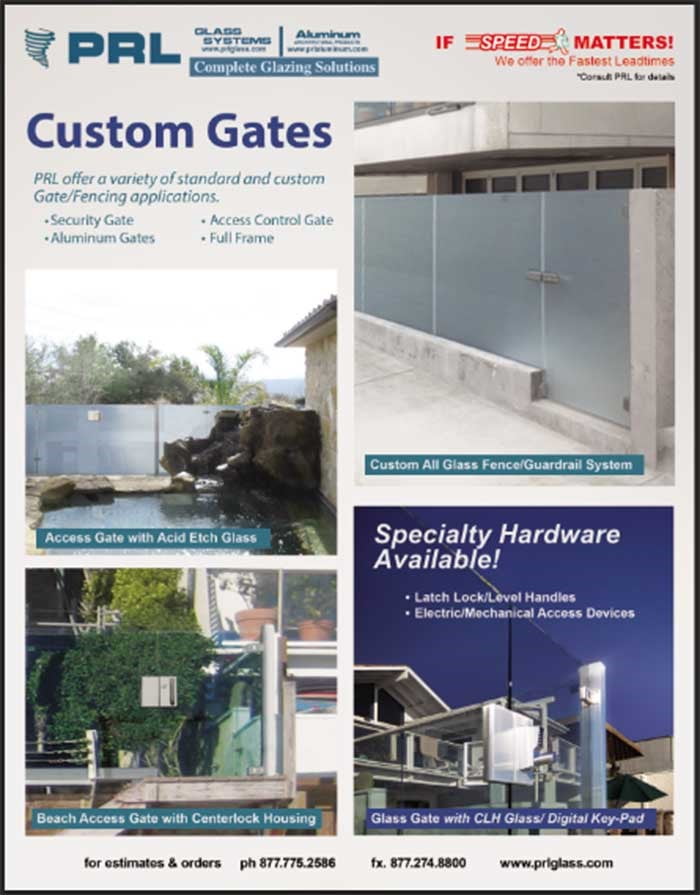
Custom Glass Gates

Custom Glass Metal Railing

Custom Glass Specialty Experts

Custom Glass Table Tops

Custom Glazing Installation Images

Custom Handrail and Guardrail Posts

Custom Heavy Tempered Glass

Custom Shower Units

Dead Bolt Locking Door Pulls

Decorative Glass Beautifies Interiors

Decorative Laminated Glass

Door Pull Handles

Dryset Sidelite Door Rails

Dryset Sidelite Headers

Easy Install Handrail System

Easy Locking Ladder Pulls

Easy Locking Ladder Pulls

Elegant Full Framed Clad Doors

Elegant Glass Fences and Gates

Entrance Systems

Entrance Door Panic Device Catalog

Entrance Door Systems
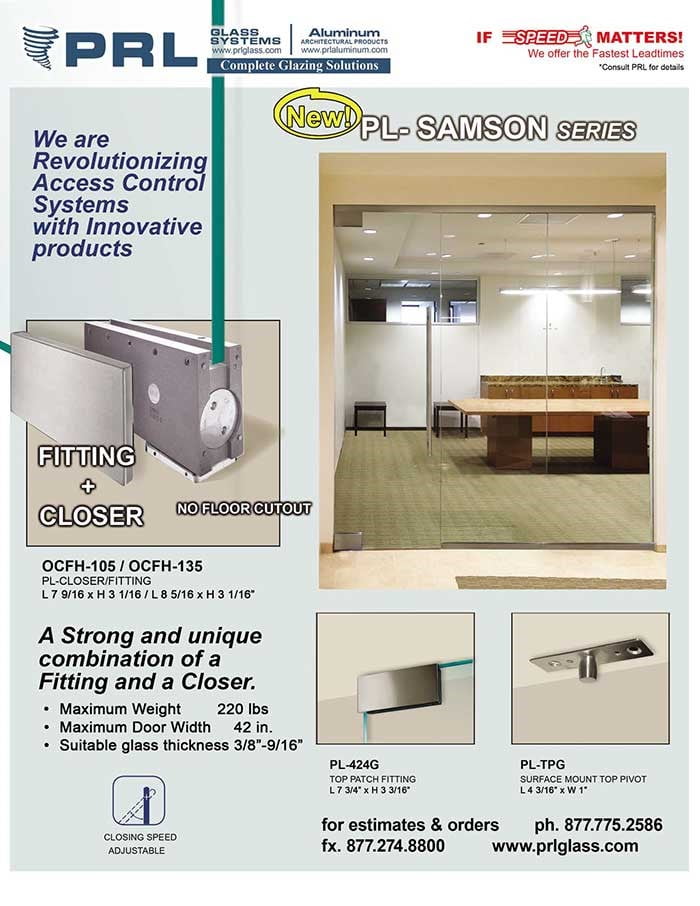
EURO Patch Fittings

Exterior Glass Door Applications

Fabricated Aluminum Doors

Fabricated Mirrors

Fast All Glass Door Installation

Fire Rated Glass

Flex Post Handrail/Guardrail System

Flex Post System

Floating Header Panic Device
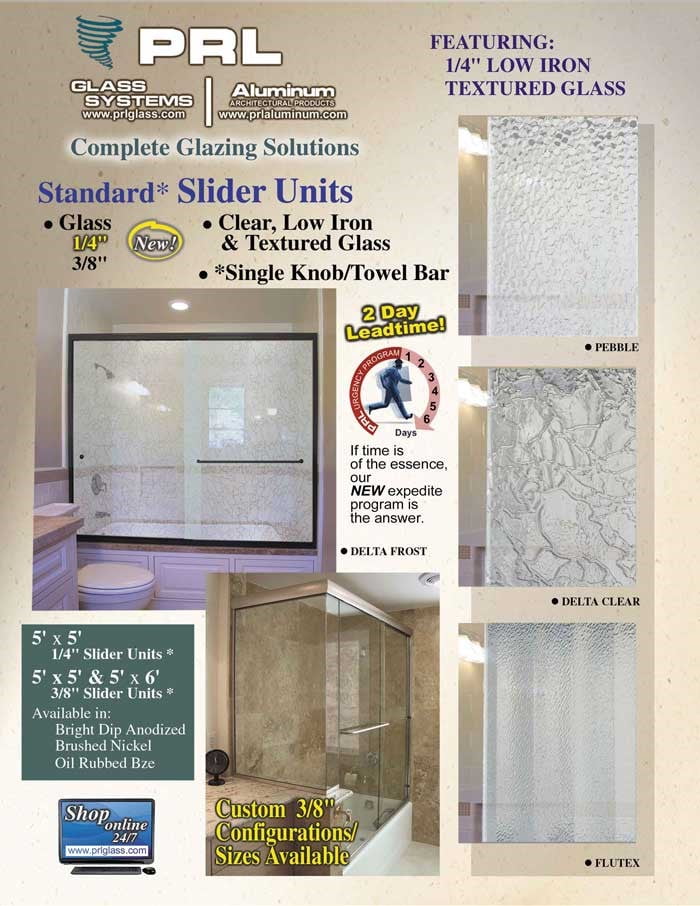
Frameless Glass Bypas Doors

Frameless Shower Doors and Glass

Frameless Shower Enclosures

Frameless Shower Units

Free Admission – Glass Expo West 2015

full-framed-cladded-doors

Guardrail/Handrail Components – Top Caps

Glass Build America – 2018

Glass and Aluminum Discount

Glass and Metal Concepts

Glass and Metal Custom Railing

Glass Applications

Glassbuild America – 2018

Glassbuild America – 2016

Glassbuild America – 2018

Glass Door Exit Device

Glass Expo West – 2017

Glass Fences and Gates

Glass Office Cubicles

Glass Post Railing System

Glass Sliders

Glass Stand Off Railing Systems

Glazing Applications
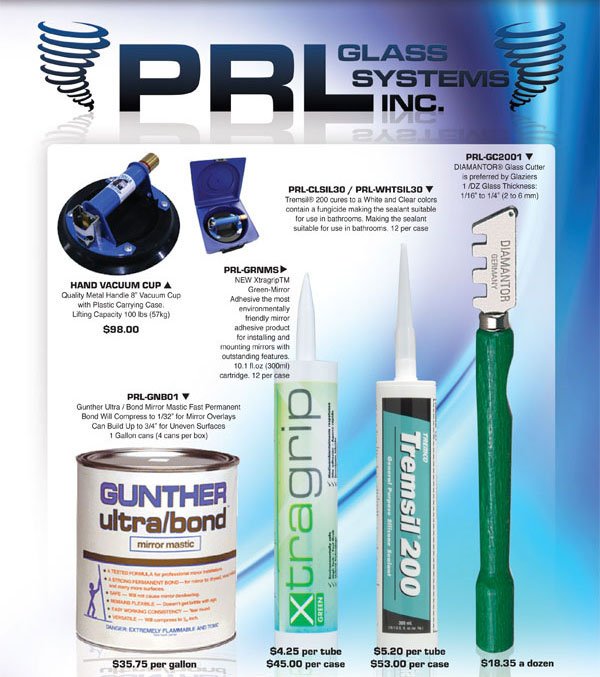
Glazing Products

Glazing Sealants

Glazing Solutions

Gluechip Shower Glass – Lilly

Green Tinted Glass

Guardrail Components

Guardrail System

Handrail PDF From PRL

Handrail Top Cap

Harrah's Casino Shower Door Project

Heavy Duty Glass Door Hinge

Heavy Tempered Glass

Heavy Tempered Glass Specialist

High Quality Aluminum Sliding Door
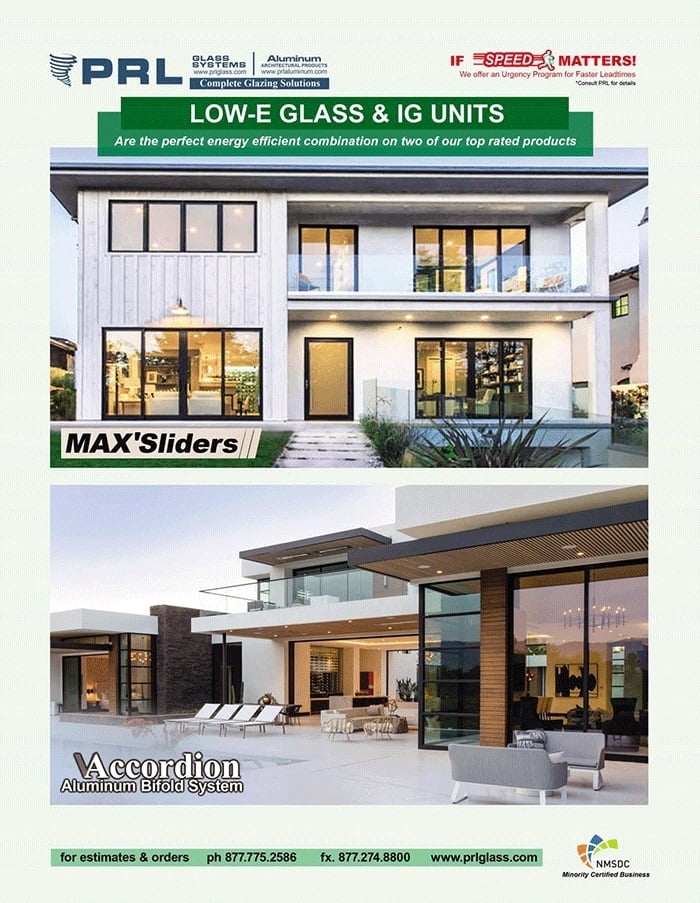
Low-E Glass and IG Units

Infinity Glass Guardrail System

Infinity Guardrail System

International Glazing Solutions

Keralite® Fire Rated Glass

PRL Ladder Pulls

Laminated Colored Glass

Laminated Glass

Laminated Glass

Laminated Glass Line

Laminated Glass Manufacturing

Laminated Glass PossiblitiesZ

Laminated Glass Products

Laminated SentryGlas®

Laminated Tempered Security Glass

La Puente Glass Manufacturers Award

LED Glass Railings

Architectural Glass Manufacturer

Los Angeles Door Hardware Manufacturer

Low-E Architectural Glass

Low-E Glass

Low Emissivity Glass

Low-Iron Mirros

MAX' Slider Door System

MAX'Slider Hurricate Impact Resistant

MAX'Sliders

MAX' Sliding Doors

MAX' Sliding Doors

MBE Certification

Mighty Mini Rapid Dry-Set

Mirrors

Narrow Door Stiles

New Insulated Glass Line

New PRL 2015 Catalog

New Raipd Low Profile Handrail Base System

New Shower Door Enclosure Catalog

New White Translucent Structural SentryGlas®

PRL has NFRC Certification

NFRC Certified Aluminum Sliding Glass Doors

Online Frameless Shower Door Ordering

Online Order Entry Contest

Online Order Entry Contest

Online Ordering and Quoting

PRL – Online Specs

Order and Quote PRL Storefront Stock Lengths Online

Order Glass Online

Order Shower Door Sliders Online

Oversized Glass Tempering Oven

4th Oversized Tempering Furnace

Oversized Tempering Furnace

Painted Spandrel Glass

Panic Device – Raising The Bar

Panic Devices and Hardware Catalog

Panic Device Tested Over 1 Million Cycles

PRL Panic Hardware

PG51A W1 Glass Fabrication

PG51A W2 Glass Fabrication

PRL PL-2000 HD Floor Closer

Insultaed Glass

Price Increase

Privacy Glass

PRL 2012 Glass Handrail Catalog

PRL 2018 Architectural Glass Catalog

PRL Account Info

PRL All Glass Entrance Systems

PRL Aluminum Bifold Accordion Doors

PRL Company Directory

PRL Company Directory – 2017

PRL Deadbolt Handles

PRL Elegante Handrail System

PRL Glassbuild – 2014

PRL Glass – My Account

PRL Glass Price Increase

PRL Glass Systems, Inc.

PRL Glazing Products Galleries

PRL Handrail Base for Glass

PRL Infinity Guardrail System

PRL Laminated Glass

PRL Glass and Aluminum

PRL New Will Call Hours

PRL Panic Device

PRL Photo Contest

PRL Shower Door Hardware
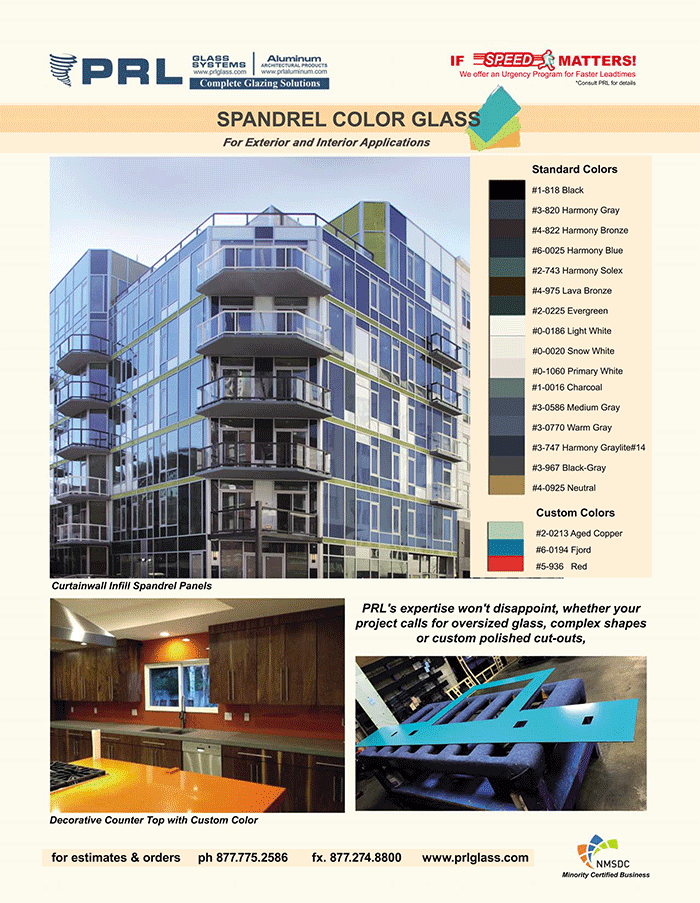
PRL Spandrel Glass
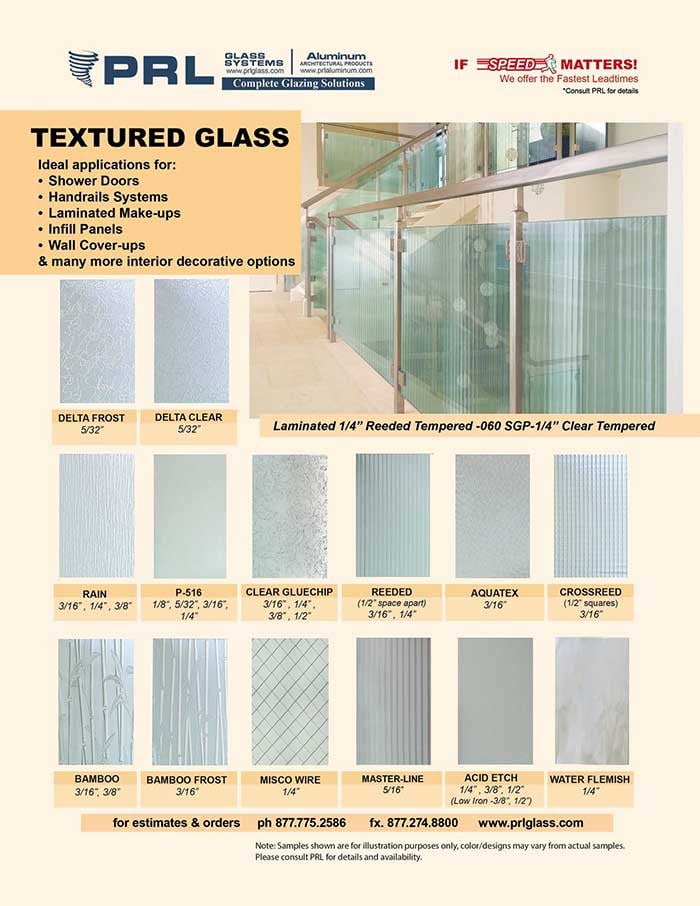
PRL Textured Glass

PRL Tinted Uncoated Glass Products

PRL Project Photos

Push/Pull EZ Access Egress Control Devices
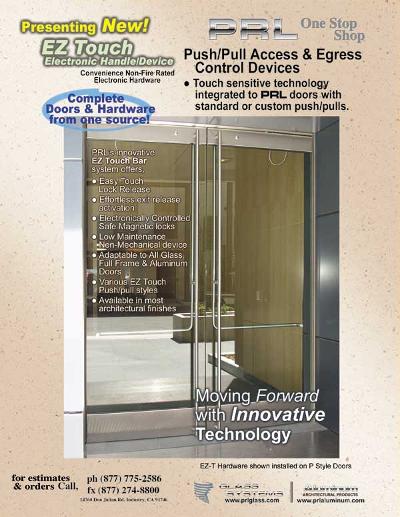
Push/Pull EZ Access Egress Control Devices

Quote and Order PRL Products Online

PRL Railing System

Rapid Design Base Shoe

Rapid Dry-Set Base Shoe

Rapid Dryset Door Rails

Raipd Dryset Sidelite Rail Manufacturer

Raipid Handrail Base

Raipd Handrail Systems Test Report

Reflective Glass

Robot Polisher System

Round Bar Handle Panic Device

Round Tube Mitered Corner Panic Device

Ruby All Glass Sliders

Ruby All Glass Sliding System

Samson Glass Handrail Clamp System

Samson Heavy Duty Hinge

Sampson Hydraulic Door Patch Closer

Sandblasted Glass

Sandblast Glass Creations

Sealants Cue Card

Security Glass Bullet Resistant Laminates Ballistic Glass

Selling Glass and Metal

Shower Door Coatings

Shower Door Hardware

Shower Door Slider

Shower Door Sliders
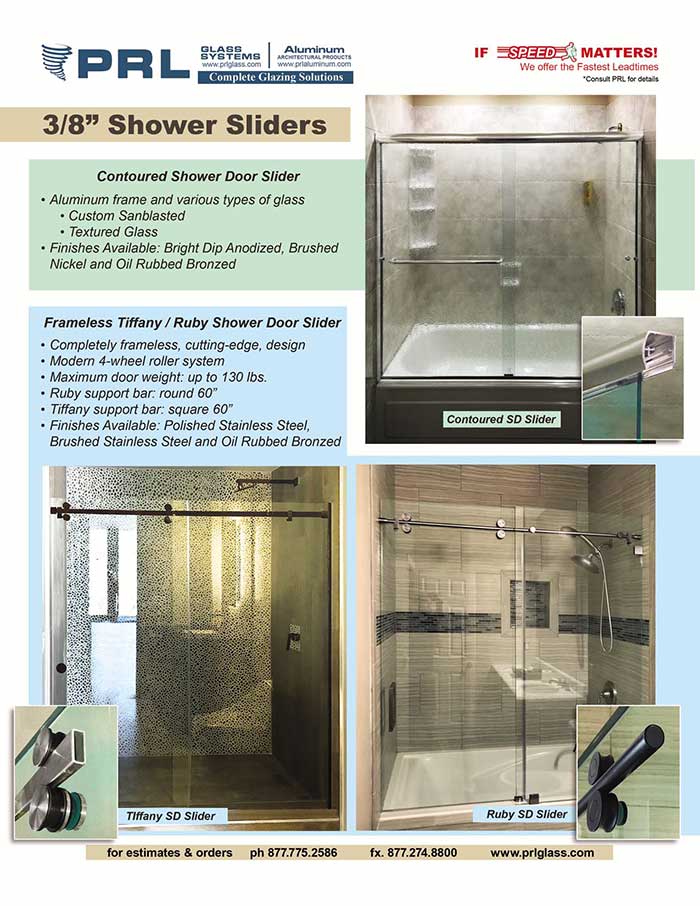
Shower Doors Slider

Shower Glass Door Hardware

prl-shower-glass-types

Shower Sliders

Sidelites Dryset Glass Rails

Silicone Products

PRL's MAX'Sliders – Sliding Doors

Sliding Glass Doors – Nail Fin Frame

Sliding Glass Doors

Sliding Pocket Door

Small Handrail Base

Sunguard SuperNeutral Series SNX 62/27

Solarban® 60 Low-E Glass

Solarban® 60 Low-E Glass

Sound Control Laminated Glass

PRL’s Spandrel Color Glass

PRL Spandrel Glass

Spandrel Glass in Shower Enclosures

Specialty Glass Doors

Square Deadbolt Locking Door Pull

Square Panic Bar Device

Square Tube Panic Device

Sainless Steel Railing Systems

Starphire Glass

Starphire Glass

Storefront and Glass Door Specifications

PRL Storefront Systems

Sunguard SNR 43 Superneutral&#reg; Series

Sunguard SNX 51/23

Super Neutral 54 Crystal Gray Glass

Super Neutran 68HT for Embedded Laminated Glass

Tall Door Panic Device

Tempered Glass Fabricator

PRL Textured Glass

Tiffany All Glass Interior Sliding Door System

Tiffany Glass Sliding Door System

Tiffany Interior Glass Sliding Door System

Tiffany Shower Door Slider
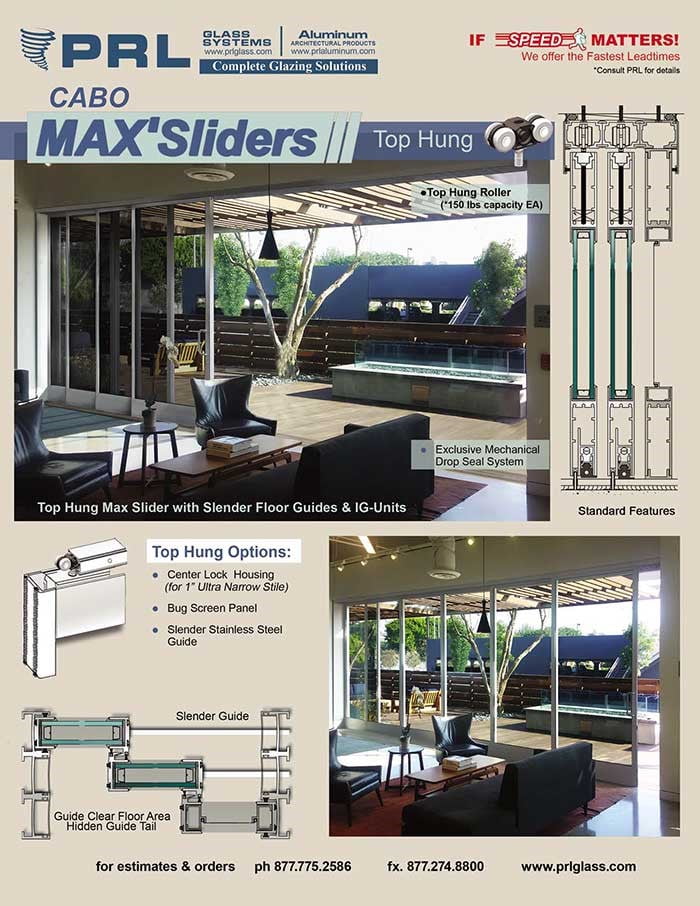
Top Hung Aluminum Sliding Door

Top Hung Sliding Door

Top Hung Sliding Doors

Transparent Mirror

Tubular Panic Device

Tubular Panic Device and Hardware

TVS All Glass Entrance Systems

Ultra Narrow Stile I Line Doors

PRL Urgency Program

Winners of our Photo Contest
For Complete Tempered Glass Specifications, Estimates and Orders
Please Feel Free to Contact Us Directly
Toll Free (800) 433-7044
Elegante All-Glass Frameless Railings at PRL!
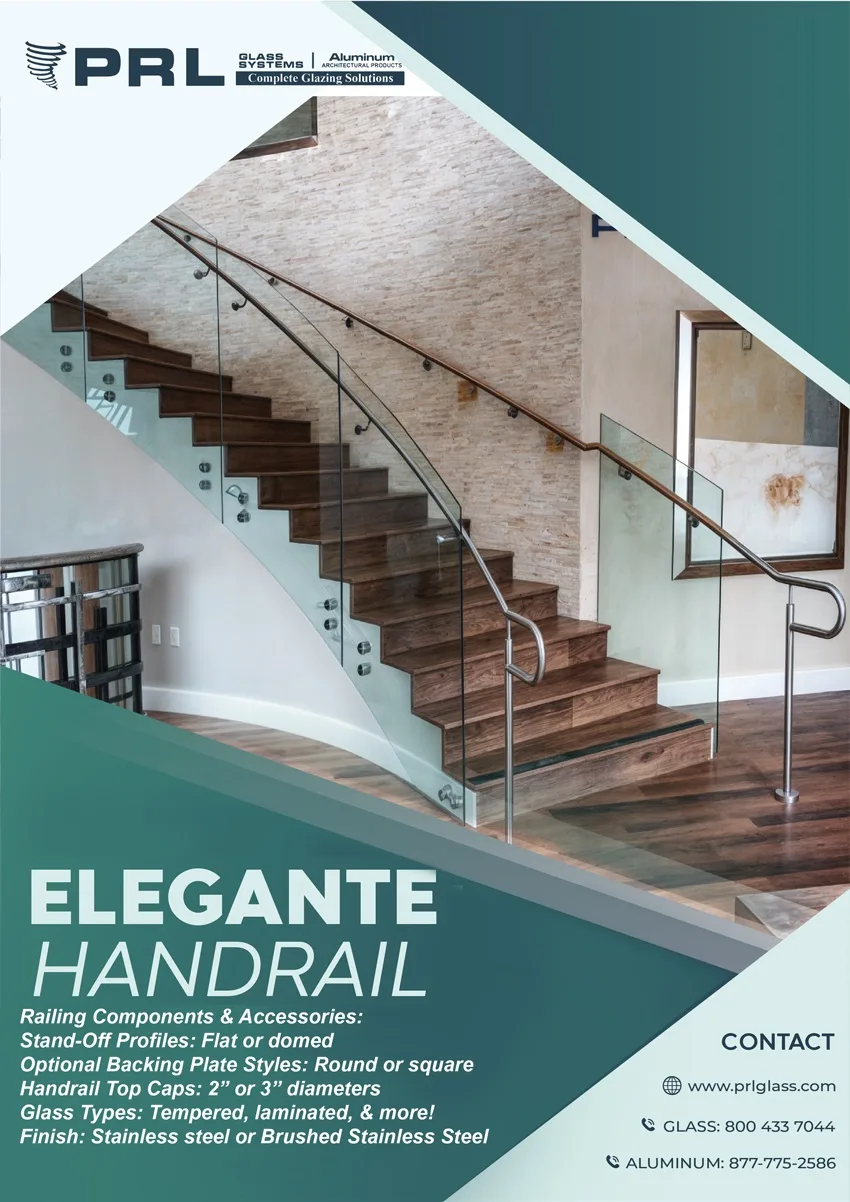
Elegante All-Glass Frameless Railings at PRL of Los Angeles, County!
Score Complete Handrail Systems in Just 2 Weeks!
Bid Elegante all-glass frameless railings at PRL! You’ll get complete handrail systems in just 2 weeks*. That’s right! Including your choice of stand-off profile, handrail tubing, brackets, top caps and glass type, we make them faster than the other Read More...
We’re Now Matching Competitor Pricing
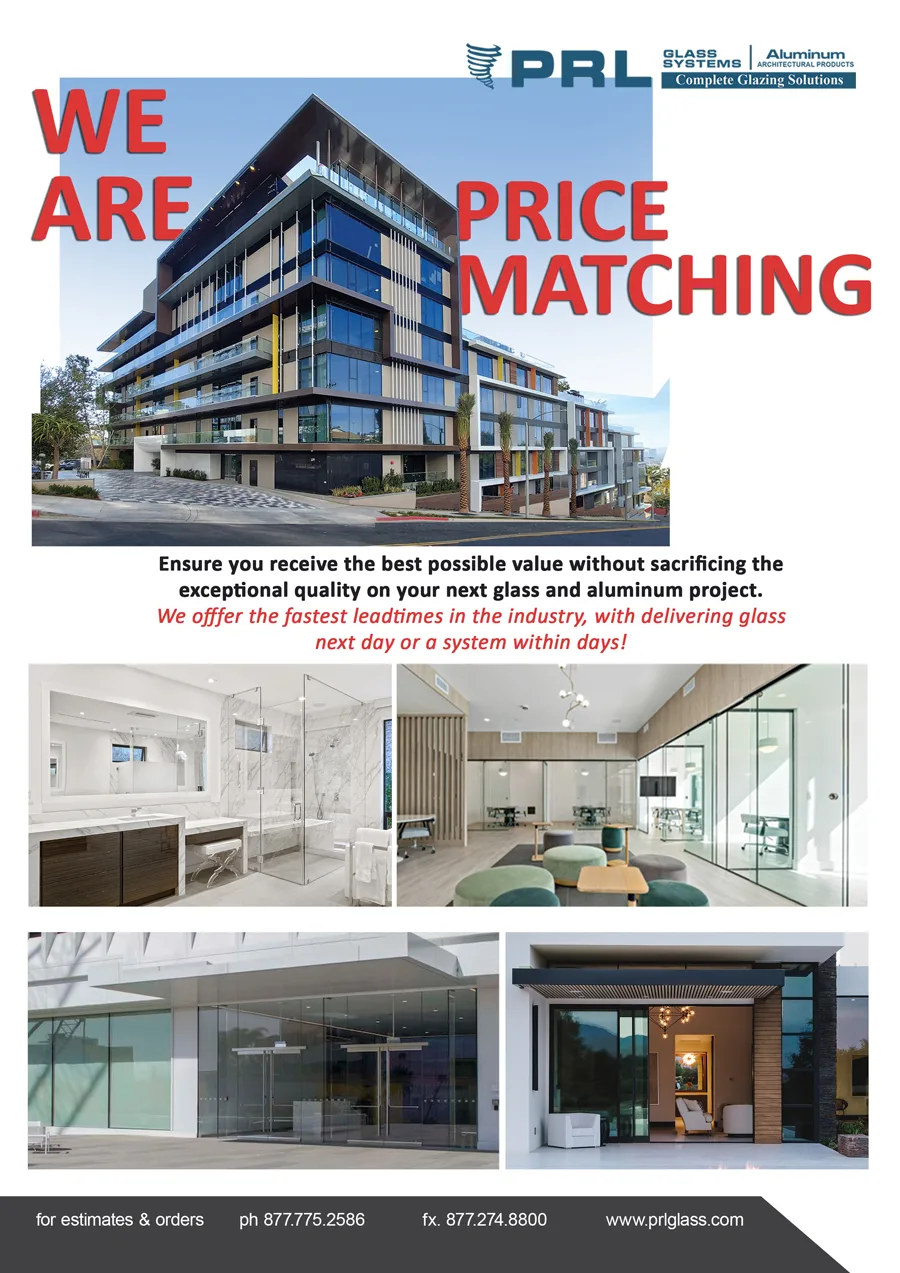
Source your next order with PRL Glass and experience the unbeatable combination of exceptional quality and incredible savings! We’re thrilled to announce that we are matching competitor pricing, ensuring you receive the best possible value without compromising on the top-notch glass and aluminum products we offer. Our materials are meticulously crafted to meet the high standards that your Read More...